
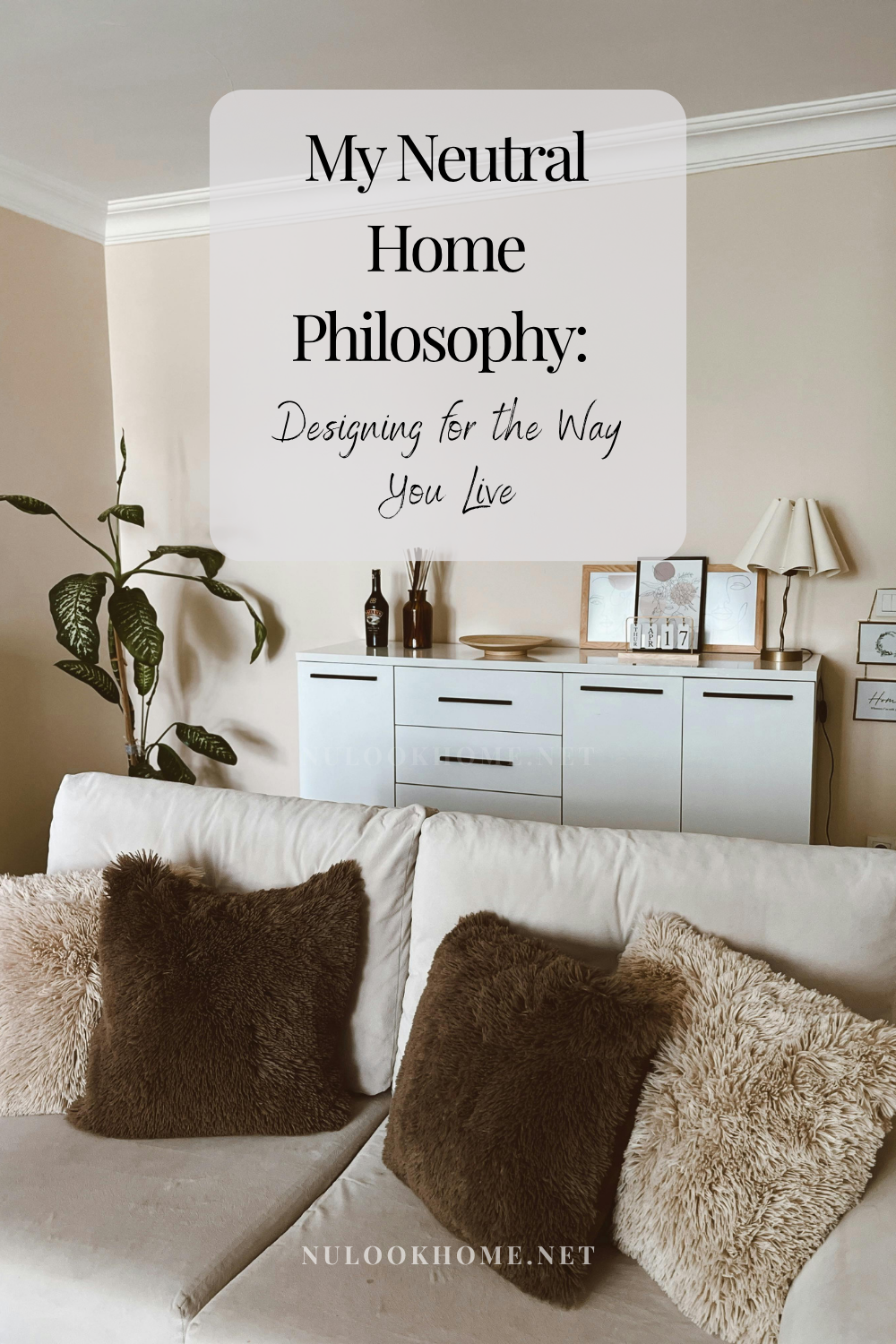
A home should feel like a reflection of the life lived inside it—not a perfectly styled showroom or magazine photo.
That’s really where the whole neutral home philosophy began. I wanted to create spaces that support real life, families, feel calm, and also be able to grow and change over time.
Neutral design isn’t about removing personality. It’s about creating a soft, simple foundation so your lifestyle, memories, and everyday routines can take center stage.
With simple colors, intentional choices, and a focus on comfort, neutral living makes it easier to create a home that truly works for you—not just one that looks good in photos. (Even tho we still want it to look good in photos, you know what I mean?)
Why I Chose Neutral Living

Neutral living started as a practical choice because I really didn’t know how I wanted to redecorate my space—but it then turned into a lifestyle.
A palette of creams, soft beiges, warm whites, and natural wood tones instantly creates a sense of calm. Instead of competing for attention, these colors give your eyes a place to rest.
And one of the biggest benefits? Flexibility.
As your tastes shift or seasons change, a neutral home adapts easily. You don’t have to start over every time you want something new. The neutral decor is the foundation to other styles. You can easily add pops of color and even unique pieces, and everything would still flow together nicely and keeps it’s character.

Some of the biggest benefits of neutral living:
- A calming, peaceful visual environment
- Decor that’s easy to switch and update
- A timeless look that doesn’t chase trends
- A cohesive buildable flow from room to room
At the end of the day, neutral design helps you focus less on how your home looks—and more on how it feels.
Letting Go of Perfection
One of the most important shifts in my home philosophy was learning to let go of perfection.

This is something that is still challenging for me especially as a mom and wife. It’s easy to get caught up in the idea that a home should always look “finished” or picture-perfect. But real homes aren’t like that—they’re lived in.
A blanket draped over the sofa, a book left open on the table, shoes and toys across the floor… those are the moments that make a home feel alive. I used to be so hard on myself whenever it came down to making sure the house was always clean before I went to bed each night and lawd forbid dishes in the sink.

Now I really don’t worry and stress about it much because with a family of six, perfection is just not possible. To keep everything cohesive, everyone gets a chore job and that my friend, equates to “calming” stress free living.
Neutral spaces naturally support this kind of living because the colors used in neutral spaces are soft and simple. Everyday life blends in instead of feeling like clutter or disruption.
Instead of chasing perfection or trying to buy the most expensive piece of furniture, try focusing on spaces that feel:
- Comfortable
- Welcoming
- Easy to maintain
- True to your everyday life
When perfection isn’t the goal, your home becomes a place you can actually relax in—not something you’re constantly fixing.
Designing for Real Life

Your home should work with your daily routines—not against them.
That means designing spaces based on how you actually live.
For example:
- Entryways that make it easy to stay organized (Read more about entryway organization here)
- Living rooms set up for conversation and comfort
- Kitchens designed for everyday cooking, not just display
Neutral design works beautifully here because it keeps things simple and purposeful.
Instead of filling a room just to fill it, each piece has a role—whether that’s comfort, function, or adding a bit of beauty.
If you’re not sure where to start, ask yourself:
- How do I really use this space?
- What would make my day-to-day life easier?
- What helps this room feel calm and inviting?
Let those answers guide your decisions.

Free Neutral Living Guide
Love calm, neutral homes?
Download my FREE Neutral Living Guide and learn how to create a peaceful space with simple decor, natural textures, and intentional design inspired by principles like Feng Shui.
Inside you’ll discover:
• neutral color palettes that feel calming
• simple room reset tips
• ways to create a balanced home
Get your free copy today.


Join Hundreds of others creating neutral homes today!
By submitting your information, you`re giving us permission to email you. You may unsubscribe at any time.
Budget and Intentionality
Creating a beautiful home doesn’t require a huge budget—it just requires intention.
In fact, neutral living often helps you spend less, because you’re focusing on what truly matters instead of chasing trends.

Instead of constantly buying new decor, you build your home slowly and thoughtfully. One piece at a time. It might take a little longer and look half done but I promise you it’ll be worth it.
A few simple ways to design intentionally on a budget:
- Choose timeless, neutral furniture
- Mix new pieces with thrifted or vintage finds
- Invest in quality basics like lighting and textiles
- Add pieces gradually that feel meaningful to you
Over time, this creates a home that feels layered, personal, and lived-in—without the pressure to constantly redecorate.
How NULOOK Home Supports You

At its core, NULOOK Home is built around one simple idea: your home should support the way you live.
Through guides, inspiration, and thoughtful resources, NULOOK Home is here to help you create spaces that feel calm, intentional, and personal.
This isn’t about achieving a “perfect” home.
It’s about building one that works beautifully for your everyday life.
Whether you’re simplifying your space, refreshing a room, or leaning into a slower lifestyle, neutral design gives you a strong and flexible foundation.
Final Thoughts
A neutral home philosophy isn’t about limiting creativity—it’s about making room for what really matters.
When you focus on simplicity, intentional choices, and real-life living, your home naturally becomes more calm, flexible, and authentic.
It doesn’t need to follow trends.
It doesn’t need to look like anyone else’s.
It just needs to support the life you want to live.

Leave a Reply