
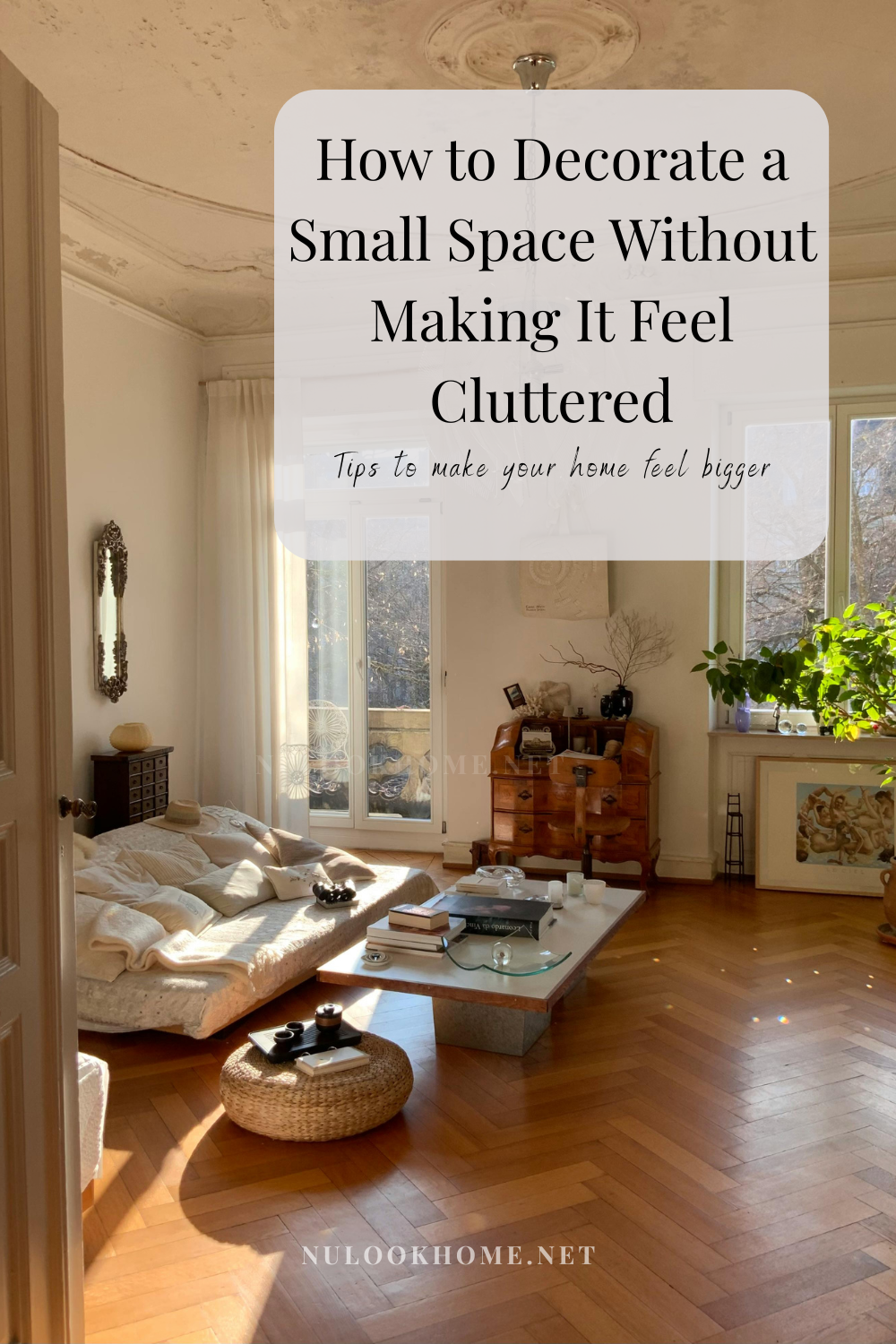
Creating a beautiful home in a small space can feel challenging, but the truth is you do not need a huge house to create a calm, stylish, and functional environment. With the right interior decorating strategies, even the smallest rooms can feel open, cozy, and intentional.
Whether you live in a small apartment, studio, townhouse, or simply have compact rooms in your home, these simple decorating tips can help your space feel bigger without sacrificing comfort or personality.
Why Small Spaces Feel Cluttered So Easily

Small spaces become overwhelming when there is too much visual noise. Oversized furniture, excess decor, poor lighting, and lack of organization can quickly make a room feel crowded.
The goal is not to make your home feel empty. The goal is to create balance.
When a room feels balanced:
- Your mind feels calmer
- The room appears larger
- Cleaning becomes easier
- Your home feels more peaceful and functional
This is one reason why minimalist and neutral home decor styles continue to grow in popularity. They naturally reduce visual stress while helping spaces feel lighter and more breathable.
1. Choose Furniture That Fits the Scale of the Room

One of the biggest small-space decorating mistakes is using furniture that is too large.
Instead:
- Choose slimmer furniture silhouettes
- Look for furniture with exposed legs
- Use multi-functional pieces
- Avoid bulky sectionals in tight areas
For example, a compact neutral accent chair can make a room feel more open than an oversized recliner.
Furniture with visible space underneath also helps create the illusion of more floor space, which visually expands the room.
2. Stick to a Light and Neutral Color Palette

Neutral colors reflect more light and naturally make spaces feel larger.
Popular calming colors for small spaces include:
- Soft white
- Cream
- Beige
- Warm taupe
- Light gray
- Sand tones
These colors create an airy feeling while helping the room feel cohesive rather than chaotic.
A neutral color palette also works well because it is timeless and easy to update seasonally with small accents like pillows, throws, or plants.
3. Use Vertical Space Instead of Floor Space

When decorating a small room, think upward.
Using vertical storage helps maximize space without overcrowding the floor.
Ideas include:
- Floating shelves
- Tall bookcases
- Wall hooks
- Vertical cabinets
- Hanging plants
- Mounted lighting
This keeps the room functional while maintaining openness.
4. Let Natural Light Be Part of the Design

Lighting plays a huge role in how spacious a room feels.
Dark rooms often feel smaller and heavier, while bright rooms feel more open and welcoming.
To maximize light:
- Use sheer curtains
- Keep windows less cluttered
- Add mirrors to reflect light
- Choose 2700k warm lighting over harsh lighting
Natural light also supports mood and mental wellness, which is why bright, airy interiors often feel more peaceful and energizing when decorating a small space.
5. Decorate With Intention Instead of Overfilling the Room

A common misconception is that every empty corner needs something in it.
It does not.
Intentional decorating is more effective than overcrowding a space with trendy decor pieces.
Instead of filling every area:
- Choose a few meaningful decor items
- Focus on texture over quantity
- Leave breathing room between objects
- Create visual balance
A simple ceramic vase, layered neutral textiles, and one healthy plant can often feel more luxurious than shelves packed with decor.
6. Use Mirrors to Make the Room Feel Bigger

Mirrors are one of the oldest interior decorating tricks for small spaces.
They help:
- Reflect light
- Create depth
- Visually expand the room
- Brighten darker corners
Large mirrors especially work well in:
- Living rooms
- Entryways
- Bedrooms
- Dining areas
For a softer look, choose mirrors with warm wood, black, or minimalist neutral frames.
7. Keep Clutter Hidden Whenever Possible

Visible clutter instantly makes a room feel smaller.
Using hidden storage can dramatically improve how your home feels.
Try:
This helps maintain a cleaner visual environment while still keeping everyday items accessible.
8. Add Texture to Keep the Space From Feeling Flat

Minimal decorating does not have to feel boring.
Texture adds warmth and depth without creating clutter.
You can layer texture through:
- Linen curtains
- Knit throws
- Woven baskets
- Natural wood
- Soft rugs
- Ceramic decor
- Cotton bedding
This creates a cozy and elevated look while keeping the room visually calm. In this post, I go deeper into how you can decorate with neutral decor without making it boring. Trust me when I say that it will change your perspective on the whole “neutral” look.
9. Bring Nature Indoors With Plants

Plants can completely transform any space especially a small space. I will ALWAYS say this.
Not only do they add beauty and softness, but studies have shown indoor plants may help improve mood, reduce stress, and create a more calming environment.
Good plants for small spaces include:
- Pothos
- Snake plants
- ZZ plants
- Peace lilies
- Small herbs
Plants also work beautifully with neutral home decor because they add organic texture and natural color. I did a post a while back about how beneficial it is to have nature indoors.
10. Create Zones Within the Space

Even small rooms benefit from having clear zones.
For example:
- A reading corner
- A workspace
- A relaxing bedroom area
- A dining nook
Rugs, lighting, and furniture placement can help separate areas without needing walls.
This makes the room feel more organized and intentional.
Final Thoughts

Decorating a small space is not about making your home perfect. It is about creating a home that feels calm, functional, and comfortable for everyday life.
When you focus on light, balance, intentional styling, and thoughtful organization, even the smallest spaces can feel beautiful and peaceful.
Sometimes less truly does create more room to breathe.
Leave a Reply