
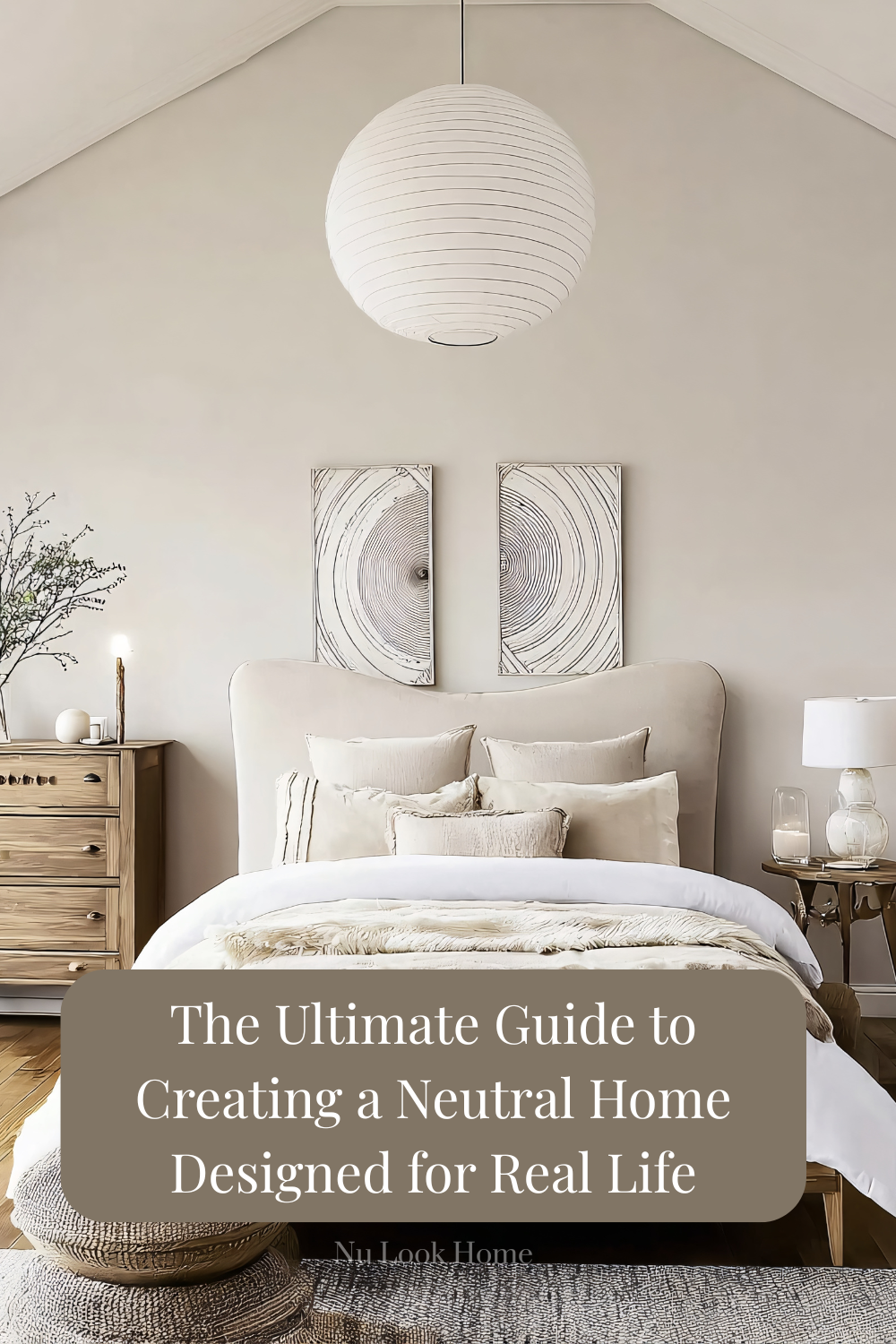
Here’s the ultimate guide to creating a Neutral Home Designed for Real Life
It’s time for a new look and right now, it’s the perfect opportunity for a fresh start, perhaps even a “new you”! (Laughs) Well, when it comes to your home, I truly believe that your living space plays a really big role in shaping that “New You” experience.
Creating a neutral home isn’t about following trends or making your space look perfect. It’s about building a home that feels calm, intentional, and supportive of the way you actually live.
My idea of a neutral home or “neutral living” means warmth over a sense of emptiness and gloom, simplicity over excess, and comfort over perfection. This guide will walk you through how to create a neutral home that feels lived-in, balanced, and beautiful — even on a budget.

What does “Neutral Living” Really Mean?
Neutral doesn’t mean boring or empty. A well-designed neutral home feels layered, textured, and personal. It’s a space where soft tones create calm, and thoughtful details bring warmth.
Neutral living is about:
- Creating visual quiet
- Allowing your home to grow with you
- Designing for real routines, not staged moments
When your home feels grounded, your life often follows.
Step 1: Start With a Calm Neutral Foundation
Every neutral home begins with a foundation that feels light and balanced.
Focus on:
- Soft whites, warm beiges, taupes, and muted greiges
- Walls and large furniture in neutral tones
- Letting natural light be part of the design
Budget tip:
You don’t need to repaint everything. Neutral curtains, slipcovers, or rugs can instantly soften a space.

Step 2: Layer Texture, Not Color
The secret to a neutral home that doesn’t feel flat is texture.
Add warmth through:
- Linen, cotton, or wool textiles
- Wood tones (light oak, walnut, bamboo)
- Rattan, ceramic, or stone accents
These layers create depth while keeping your palette calm.

Step 3: Choose Pieces That Support Real Living
A neutral home should work for your lifestyle, not against it.
Ask yourself:
- Can this piece handle everyday use?
- Does it support how I move through the space?
- Will it still feel right in a year or two?
Choose furniture and decor that feel comfortable, flexible, and practical — especially in high-use areas like living rooms and bedrooms.

Step 4: Edit With Intention
Neutral homes thrive on thoughtful editing.
Instead of filling every surface, focus on:
- A few meaningful decor pieces
- Breathing room between items
- Clear, uncluttered pathways
Less visual noise creates more mental calm.

Step 5: Make It Personal
A neutral home should still feel like your home.
Personalize your space with:
- Framed photos
- Books you love
- Handmade or vintage pieces
- Items connected to memories or seasons of life
These details make a neutral home feel lived-in, not styled.

Step 6: Build Slowly
The most beautiful homes aren’t finished quickly.
Neutral living is about allowing your home to evolve as you evolve:
- One room at a time
- One intentional choice at a time
- One season at a time
There’s no rush. Your home should grow with you.

Final Thoughts
A neutral home designed for real life isn’t about trends or perfection — it’s about creating a space that supports your routines, your rest, and your growth.
I believe calm spaces create room to breathe, and intentional design makes everyday living feel lighter.
👉 Download the free Neutral Living Guide to start creating your calm home today.


Leave a Reply